Dorian Weber – “What’s behind the mask?”
Valérie Ziegler, nuage
His hands don’t stop working during our visit today. Dorian and his two helpers, Davide and Lenny, are in the last week of their papier-mâché work.
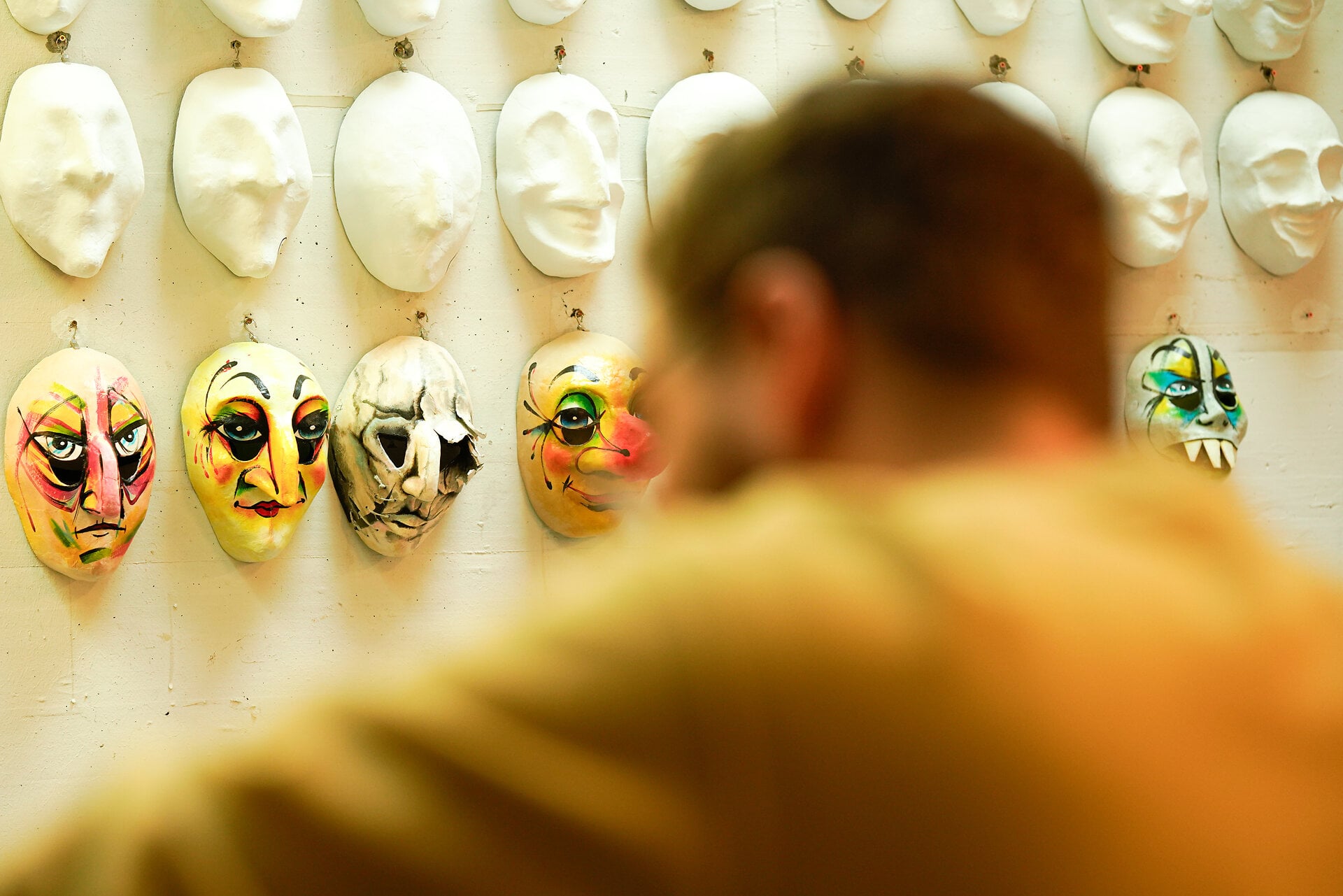
For 15 years, Basel artist Dorian Weber has devoted himself to lantern painting in a basement behind Aeschenplatz. And for two years now, he’s also been involved in producing masks. Everything is done by hand – from the shaping of the clay to the plaster cast to the papier-mâché to the colourful painting.
All 800 of the masks need to be finished by 13 February – 10 days before the start of the carnival. Dorian says that this is pretty relaxed compared with last year. Up to then, he made all the masks by himself. Pure stress! “In 2025, I was so burnt out that I couldn’t even get excited about the carnival!”
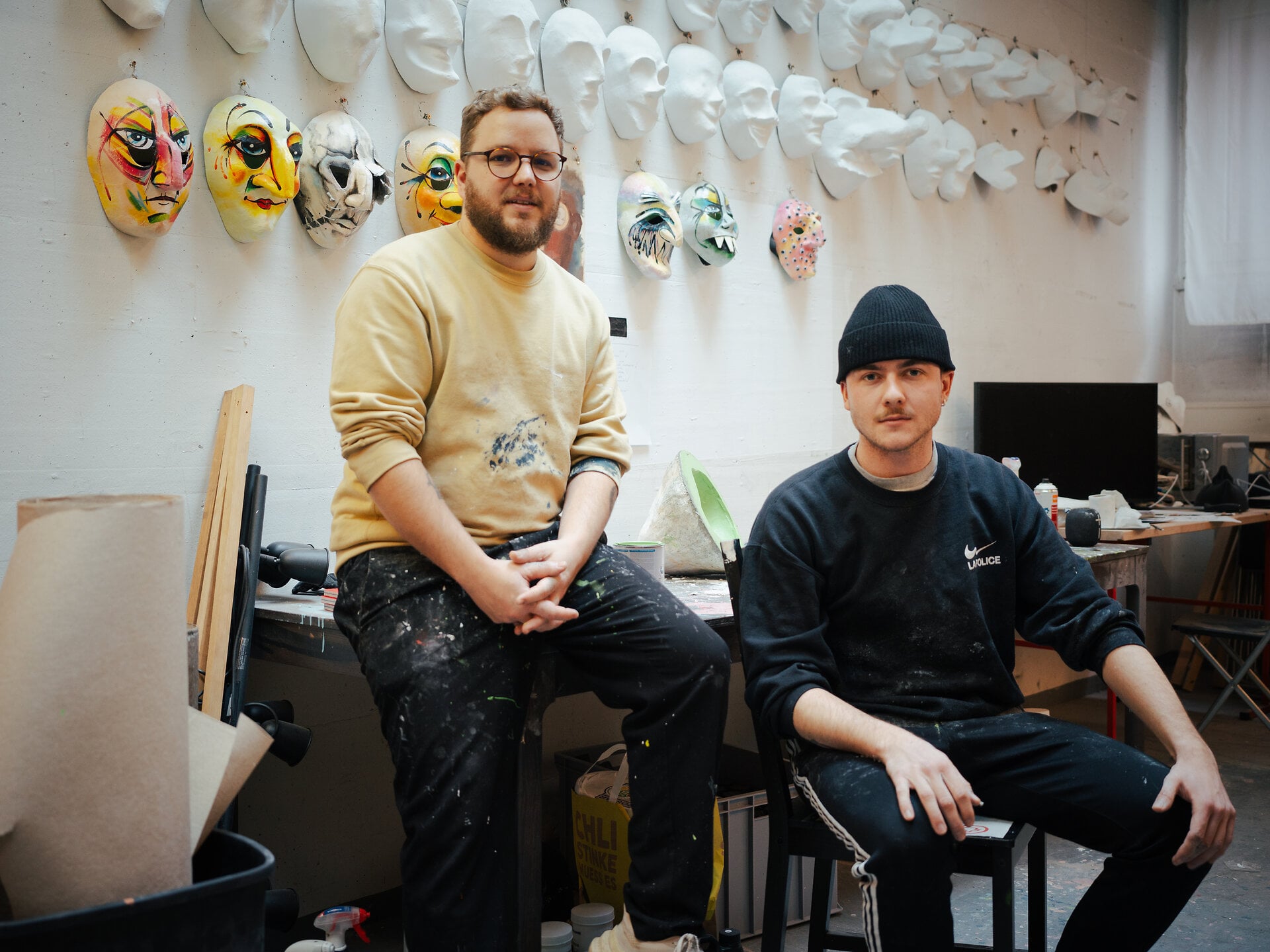
Dorian (l.) receives support in his studio from Lenny (r.) and Davide. © Basel Tourismus, Oz Jacob Tabib

Everything in the Larvedörsl studio is made by hand. © Basel Tourismus, Oz Jacob Tabib

Dorian during mask production. © Basel Tourismus, Oz Jacob Tabib

For the past two years, Dorian has also been producing masks. © Basel Tourismus, Oz Jacob Tabib
Dorian is on his feet all day. “If I sit down, I’ll just end up with lower back pain again”, he chuckles. The Glyggen, or cliques, often call in after work to try on the masks. Afterwards, the charismatic artist devotes himself to individual lanterns. But none of this bothers him. As an active carnival reveller, he’s a real pro when it comes to turning night into day.
Together with his team, he also ensures that their sometimes very monotonous work remains varied and entertaining: “Not only do we get ourselves a different lunch every day, we also like to have a Harry Potter movie or a ski race on in the background.” The speakers blare out pretty much everything from hip-hop and grunge to DJ Bobo and Adele – sometimes the louder the better.
“Six months of holiday would be too much”
It’s hardly surprising that Dorian didn’t simply become a “maskmaker” – as he prefers to call his profession: “I’ve been an active carnival reveller since childhood, and it’s the creative aspect that’s always fascinated me most.” He started painting lanterns while still an art student. Time and again, he asked himself whether he should also devote himself to creating masks. “I was sceptical about this for a long time; were my ten years of study enough to do justice to this craft?”
“I’ve been an active carnival reveller since childhood, and it’s the creative aspect that’s always fascinated me most.” Dorian Weber
But there came a day when Dorian agreed to help a clique, albeit on the spur of the moment. After that, everything spiralled pretty quickly: “Thanks to my social media channel, I quickly realized that demand was high.” He says that many other maskmakers in Basel are older and shy away from new orders. “Today, I’m incredibly happy that I took the plunge. I really like my job!”

Around 800 carnival masks are created in Dorian’s studio every year. © Basel Tourismus, Oz Jacob Tabib

Mask storage in the Larvedörsl studio. © Basel Tourismus, Oz Jacob Tabib

Various plaster moulds in storage. © Basel Tourismus, Oz Jacob Tabib
And it’s not just the artistic aspect: “The mix of six months of work overload followed by a long break suits me down to the ground.” But Dorian isn’t idle during his break. “Six months of holiday would be too much for me – and besides, it’s not realistic.” Instead, he devotes himself to his other art projects during this time.
He definitely benefits from having focussed on painting and sculpture during his time as a student: “These are actually exactly the two areas that I cover in my studio.” Furthermore, his wide-ranging knowledge of various materials and techniques enriches his day-to-day work.

Dorian pasting layers of paper to create a mask. © Basel Tourismus, Oz Jacob Tabib

Lenny during mask production. © Basel Tourismus, Oz Jacob Tabib

Lenny pasting layers of paper to create a mask. © Basel Tourismus, Oz Jacob Tabib
As an artist, he naturally enjoys being able to help shape designs. Many cliques allow Dorian to develop his own ideas after they’ve presented him with their sujet (theme). Others, meanwhile, have very specific ideas and want things done exactly their own way. But there’s at least one prototype in every case.
The Carnival in Basel is not the only source of his inspiration: “In our team, we often share videos with each other – from Italian mask designers or small carnivals, for example – which we really enjoy.”
The papier-mâché mask often readily associated with Basel is not so old: “This method has only been used for about a hundred years.” For those interested in finding out more, the Museum of Cultures has a permanent exhibition tracing the history of the Basel masks.
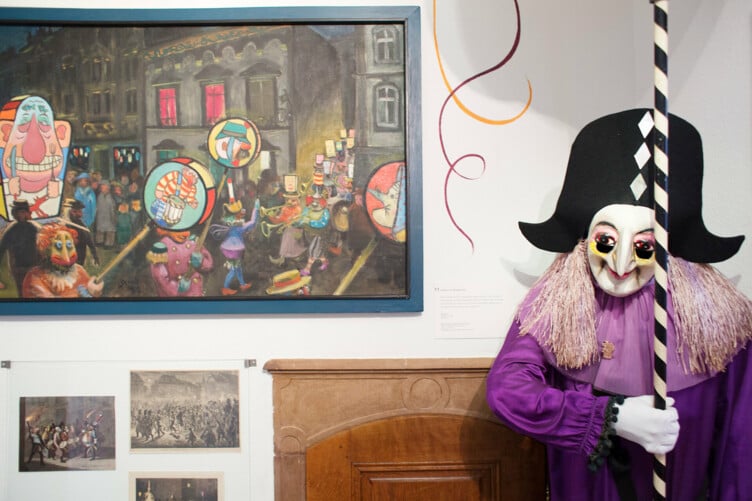
In historic rooms, the Museum der Kulturen presents a colourful cross-section of the world-famous Basel Carnival. © Museum der Kulturen Basel
Think outside the box
“My job is a huge part of my identity.” Besides Dorian, there are only around 10 other traditional maskmakers in Basel.
“My job is a huge part of my identity.” Dorian Weber
Even though the Carnival in Basel is a deep-rooted tradition that remains untouchable even for politicians, people are becoming increasingly innovative when it comes to carnival costumes. The days when you almost exclusively encountered Ueli and Pierrot on the streets of Basel are long gone.

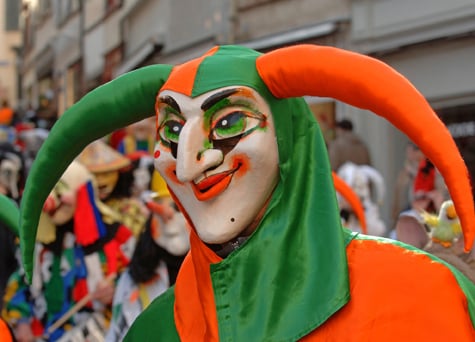
Today there are far more carnival costumes than the classic figures Ueli, Waggis and Pierrot.
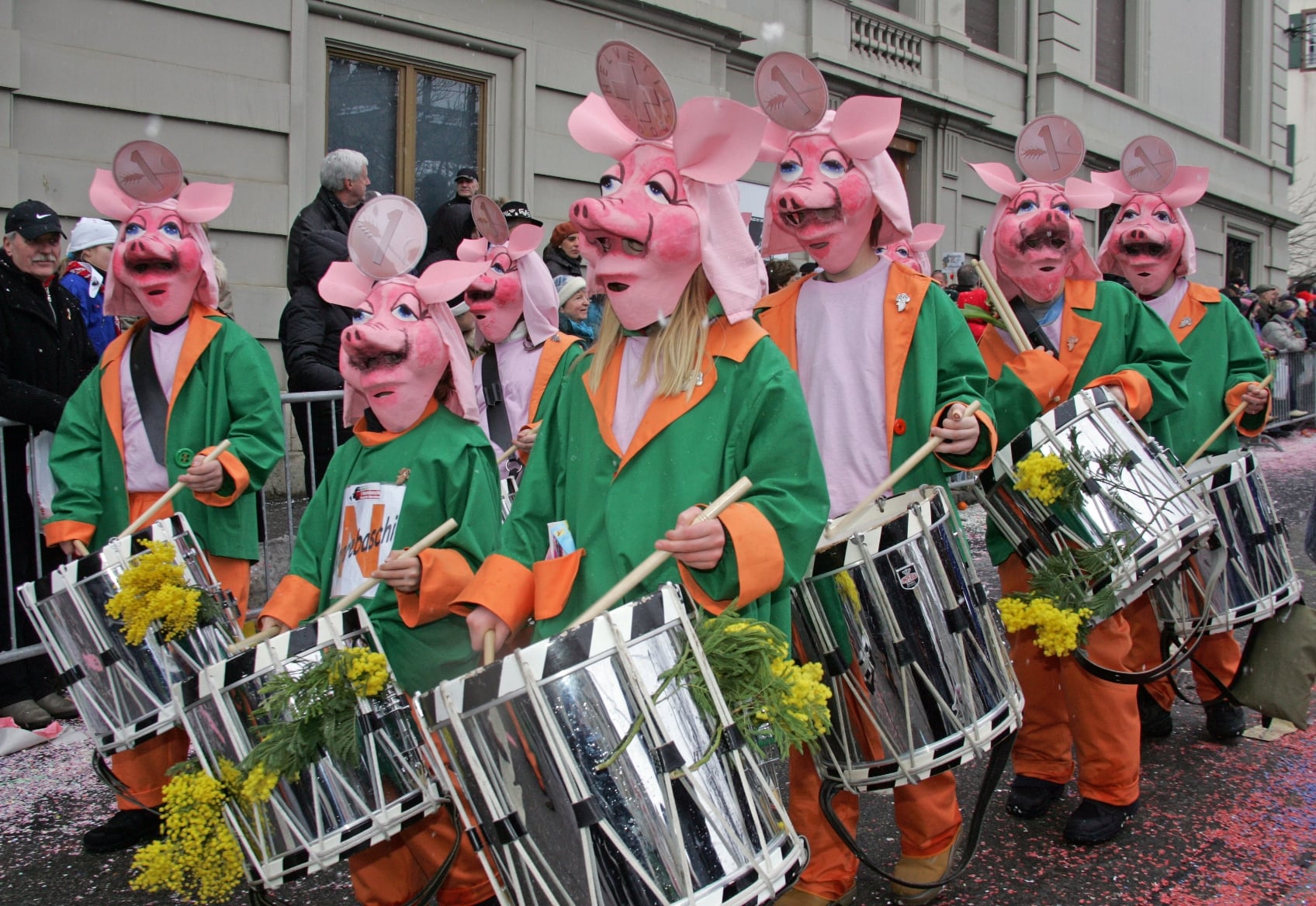
Carnival costumes are becoming increasingly innovative.

Basel Carnival constantly reinvents itself.
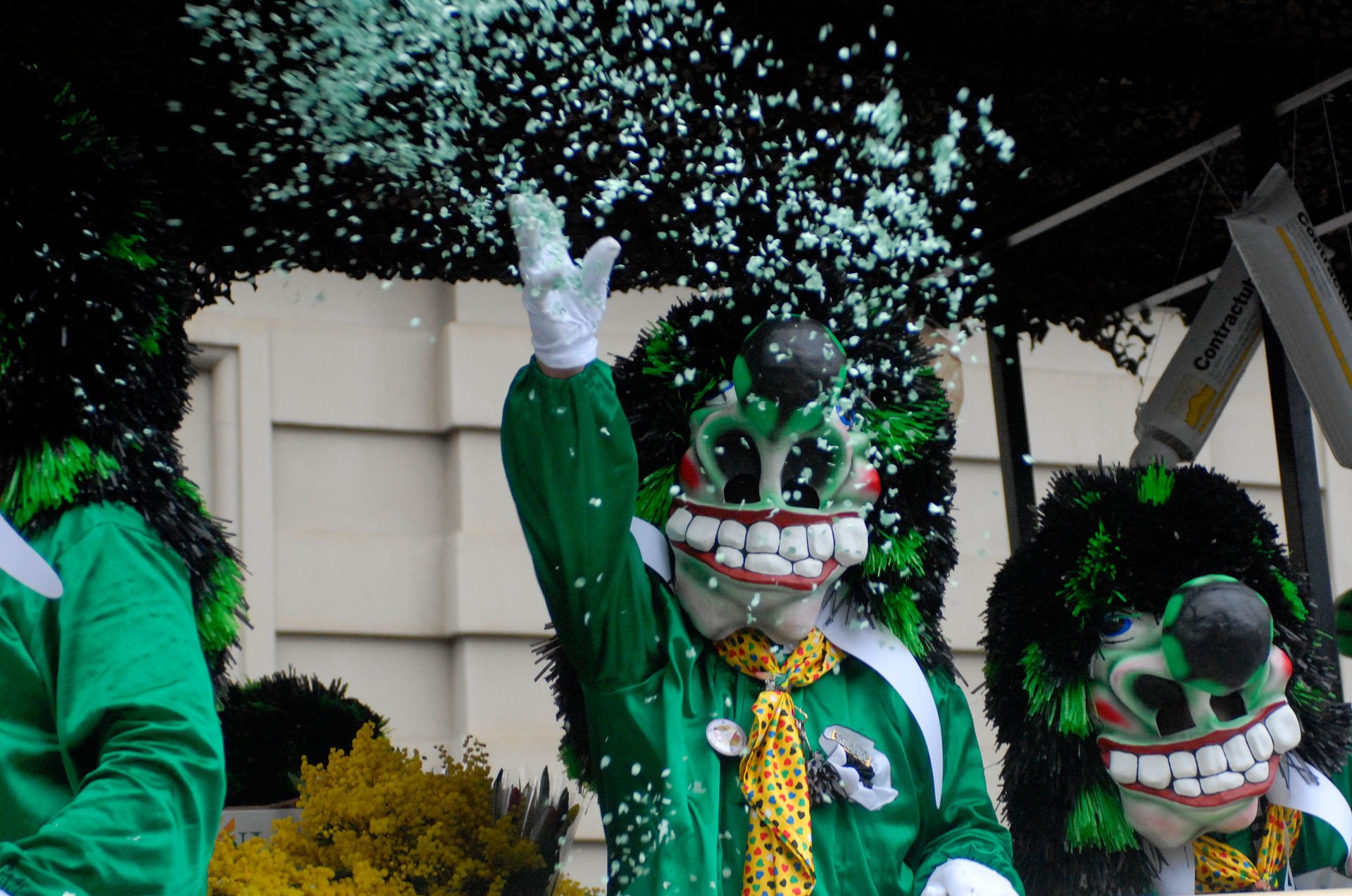
The “Waggis”, a traditional carnival costume.

The traditional carnival figure “Harlequin”.
Established carnival-goers can be critical of this; however, Dorian is always fascinated to see how a certain product can be repurposed and used as a mask, for instance: “That’s exactly what the carnival is all about for me: you constantly reinvent and rethink yourself”, he muses. “In my eyes, there are so many paths that can lead to a mask – so why limit oneself exclusively to an old technique?”
“That’s exactly what the carnival is all about for me: you constantly reinvent and rethink yourself.” Dorian Weber
What’s behind the mask? What defines a mask? “I find these questions absolutely fascinating.”
Dive in as deeply as possible
Like every year, Dorian is most looking forward to Carnival Tuesday – the only day when you can wander through the alleys with friends, as the cliques don’t have to follow an active programme. “In any case, it’s also the most boisterous day”, he grins.

On Carnival Tuesday, it’s time for “Gässle” (roaming through the streets). © Fasnachtscomité

A clique makes its way through the streets of Basel. © Fasnachtscomité
Carnival-goers need stamina: “On the Thursday, your whole body hurts. Fingers are sore from drumming, feet are covered in blisters ...”. But Dorian says this “hangover” is always worth it.
Incidentally, here’s a shocking but true fact: 90 per cent of the masks are simply disposed of on the streets during the last night of the carnival – which is legal. Dorian admits that it’s frustrating on the one hand, “although on the other hand, I always find it amusing to see all my masks lying on the streets.”
One thing Dorian believes people shouldn’t miss is the big post-carnival clean-up at 4.00 am on the Thursday morning. “It’s incredible how quickly the city becomes spotless again!” And what else? “The Morgestraich! But actually, carnival time for me means having no plans and just letting myself go with the flow ... running after the cliques, moving from pub to pub, looking at the lanterns.”
“Carnival time for me means having no plans and just letting myself go with the flow ... running after the cliques, moving from pub to pub, looking at the lanterns.” Dorian Weber
The Carnival in Basel is and remains a world of its own that connects people. Drei scheenschti Dääg – the three best days of the year that Dorian has made part of his everyday life. For six months of the year, at least.
And they will soon come to an end again. “While I was really glad to get this time behind me last year, I can well imagine that this time there will be a kind of post-event blues; who knows, maybe I’ll suddenly start missing the boys in the morning already.”
Who knows ... but that’s yet another wonderful aspect of Dame Fasnacht: It always comes back.
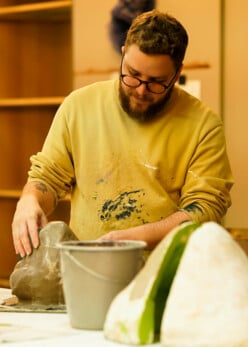
Dorian Weber
Dorian Weber is an artist and designer with a studio in Basel. In his studio, Larvedörsl, he creates masks and lanterns for Basel Carnival. His work combines traditional craftsmanship with contemporary design. For many years, his creations have shaped the visual identity of the Carnival.
larvedoersl.chGlossary
| Swiss German expression | Meaning |
| Glygge | Basel German name for “clique” – a drum and piper group that forms a club and helps organise the Carnival in Basel. |
| Sujet | Motto or topic that is artistically and satirically interpreted by the cliques and Guggenmusik players. |
| Ueli | A classic, proud figure at the Carnival in Basel, representing a medieval court jester. |
| Pierrot | Traditional, dreamy and slightly melancholic figure at the Carnival in Basel, whose origins lie in 19th-century French pantomime theatre. |
| The “drei scheenschte Dääg” | The three best days of the year – this is how locals often refer to the Carnival in Basel. |
| Morgestraich | The magical start of the Carnival in Basel, which this year gets underway on Monday, 23 February 2026, at exactly 4.00 am. Hundreds of lanterns shine in the darkened city centre, while cliques make their way through the alleys to the sounds of pipes and drums. |
| Dame Fasnacht | Affectionate term used by the people of Basel for their traditional carnival, which is personified as a female figure. |
Tip:
The many aspects of the carnival masks can also be seen in an exhibition at the Sarasin Art Gallery: 111 of Dorian Weber’s masks will be on display there until 14 February 2026 – all with the same basic shape, but interpreted in 111 different ways.
Cooperation with Basel Happens
Would you like to meet more exciting personalities of Basel? On the Instagram channel “Basel Happens”, our journalist Valérie Ziegler has been showcasing her beloved city since 2017, together with the local photographer Oz J Tabib. Discover inspiring and unique places, people, and projects!